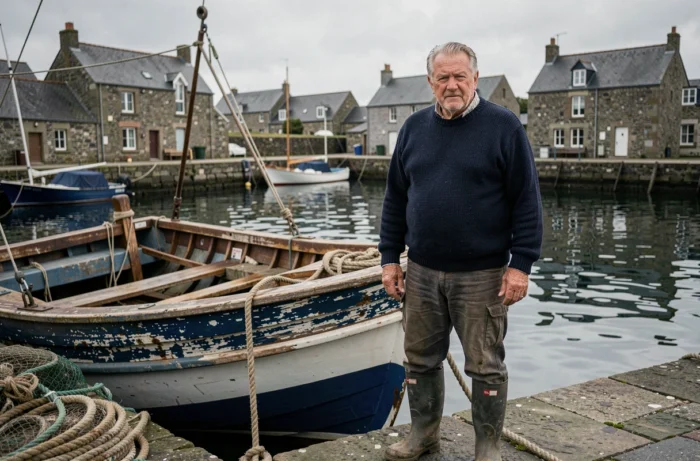
Behind the tourist facade of Saint-Malo or Pointe du Raz, a network of heritage sites, micro-terroirs, and inland landscapes requires a more nuanced reading of the Breton territory. Here, we propose a selective route, focused on places whose heritage or ecological value justifies a real detour.
Tourist Pressure on the Glénan Islands: A False Hidden Treasure
The Glénan archipelago perfectly illustrates the paradox of so-called secret destinations in Brittany. Presented for years as a preserved jewel, this site is now experiencing critically high visitor levels: an average of 90,000 visitors per year between 2022 and 2024, with daily peaks reaching 2,500 people and up to 500 vessels per day in the main sheltered area.
The Glénan Islands are no longer a secret, but a site under high environmental surveillance. This observation, documented by Le Télégramme, should prompt any informed visitor to rethink their Breton itinerary. Instead of rushing to a saturated archipelago, we recommend turning towards inland territories where the pressure remains marginal.
The resources compiled on bretagne-net.com allow for the identification of these alternatives without falling into the traps of recycled rankings from one site to another.
Inland Brittany: Megalithic Heritage and Gallo-Roman Quarries
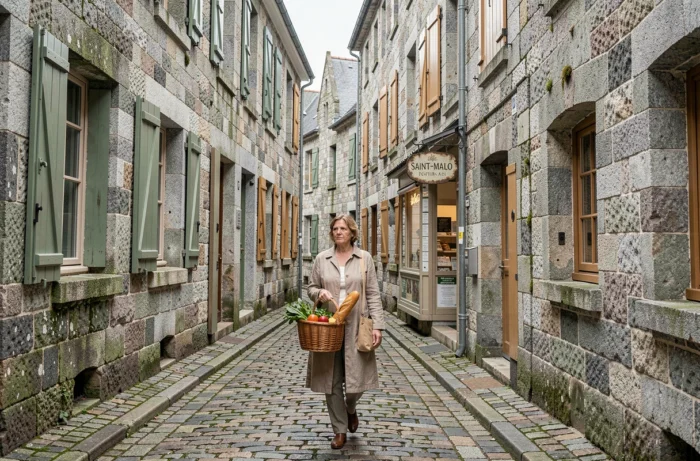
The megalithic site of Saint-Just, in the Landes de Cojoux south of Rennes, constitutes the second megalithic ensemble in Brittany. It is not a unique alignment like in Carnac, but a sacred space frequented for millennia during the Neolithic, with a remarkable density of funerary and ceremonial structures.
Further south in Morbihan, the Gallo-Roman quarry of Locuon in Ploërdut offers a completely different register. This ancient extraction site bears witness to an unknown rural industrial activity, away from any marked circuit. The municipality is also labeled Rural Heritage, which guarantees a minimum of architectural preservation of the surrounding village.
Between these two poles, the village of Locarn in Côtes-d’Armor completes a coherent heritage triangle. These three sites share a common characteristic: an almost total absence of mass tourist signage.
Why Favor These Sites Over Coastal Spots
- Visitor numbers remain low year-round, including in July-August, unlike the Breton coastline where summer peaks saturate parking lots and coastal paths
- The megalithic and Gallo-Roman heritage of the interior is freely accessible, without reservations or limits, allowing for visits at one’s own pace
- These areas constitute the green lung of Brittany, with moors and forests conducive to hiking off the GR34
Rennes, Fougères, Quimper: Three Breton Cities with Distinct Heritage Registers
Urban Brittany deserves a differentiated approach. Rennes, Fougères, and Quimper cover three complementary historical layers that a stay of a few days can articulate without redundancy.
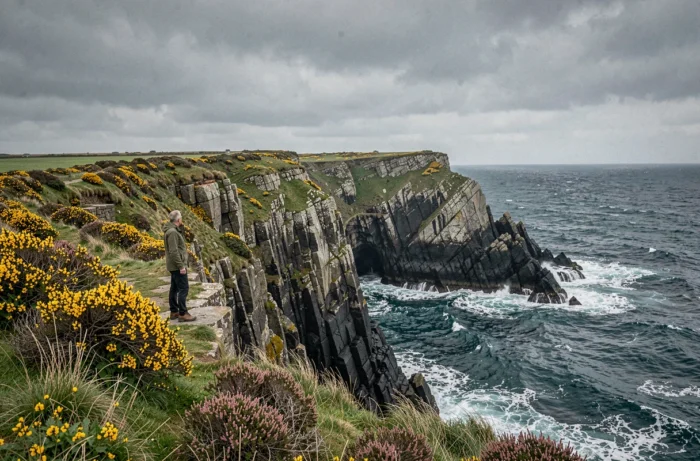
Rennes boasts one of the densest collections of half-timbered houses in France. The Place des Lices and its surroundings form a coherent medieval ensemble, but it is the Parliament of Brittany that anchors the city in Breton institutional history. The Saturday morning market in this same square remains a strong marker of local identity.
Fougères offers a completely different register. Its medieval castle, one of the largest in Europe in terms of footprint, dominates a lower district where granite houses are organized around the Saint-Sulpice church. The view from the public garden over the fortified ensemble alone justifies the detour.
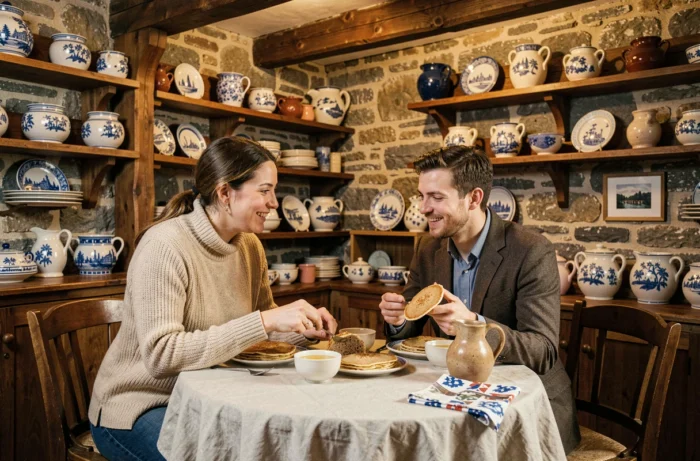
Quimper closes this triptych with its Saint-Corentin cathedral and its streets lined with old houses along the Odet. The city maintains a faience tradition documented since the 17th century, with workshops still active in the Locmaria district.
Vannes and Inland Morbihan: A Breton Port Away from Saint-Malo Clichés
Saint-Malo captures media attention, but Vannes offers a more nuanced port experience. The marina is set within a compact medieval city center, with preserved ramparts and restored half-timbered houses without pastiche.
The Gulf of Morbihan, classified among the most beautiful bays in the world by the Club des plus belles baies, functions as a semi-closed maritime ecosystem. Its tidal currents create specific navigation conditions that naturally limit the size of vessels and, by extension, the number of visitors to its inland islands.
- Île d’Arz and Île aux Moines remain accessible within minutes from the ports of Vannes or Baden, with a preserved village atmosphere
- The coastal paths of the gulf offer panoramas of a landscape of islets, mudflats, and oyster parks that are hard to find elsewhere in Brittany
- The town of Josselin, further inland, adds a medieval dimension with its castle overlooking the Oust and its corbelled houses
Breton Tourist Performance in 2026: Decisions to Make
Sector data confirms that Brittany is showing a notable increase in RevPAR in 2026, with a marked occupancy gain on the Manche coast. This dynamic means that accommodations are filling up earlier and at higher prices, particularly on the northern coastline.
For visitors seeking authentic Brittany, this implies a clear decision: book early on the coast or head inland, where the supply remains more flexible and prices significantly lower. The rise of vanlife in Brittany (the region now attracts a third of travelers in campervans and vans according to 2026 data) confirms this trend towards geographical dispersion.
The megalithic sites of the interior, the small character towns of Morbihan, and the secondary ports of northern Finistère compose a dense itinerary for those willing to stray from the coastline and devote time to exploration.