
General anesthesia alters hepatic metabolism and renal filtration for several hours. Halogenated volatile agents (sevoflurane, desflurane) and intravenous hypnotics generate metabolites eliminated through urine, some of which contain sulfur compounds detectable by smell. This phenomenon, common in post-operative recovery, nonetheless worries the majority of patients.
Metabolites of anesthetics and alteration of urinary odor
Sevoflurane produces inorganic fluoride and compound A during its degradation. These by-products, filtered by the kidney, change the chemical composition of urine in the first hours following awakening. Propofol, on the other hand, generates glucuronide-conjugated metabolites that sometimes give a greenish hue and an atypical odor.
The opioids used during surgery slow intestinal peristalsis and reduce urinary flow. More concentrated urine naturally smells stronger, regardless of any pathology. The reduction in fluid intake related to preoperative fasting exacerbates this concentration.
We regularly observe that the unusual odor of urine after surgery disappears in less than 48 hours when fluid intake is adequate. As long as this change remains isolated, without fever or burning during urination, it does not warrant further investigation.
Prophylactic antibiotics administered in a single dose before incision (cefazolin, metronidazole) also contribute to the olfactory cocktail. Metronidazole, in particular, produces metabolites with a strong metallic odor eliminated through the kidneys for several hours.
Urinary catheter and false infectious trail
After pelvic or prostate surgery, the bladder catheter remains in place for several days. The odor perceived by the patient or those around them often comes from the collection bag and tubing, not from the bladder itself. The stagnation of urine in a closed circuit at room temperature promotes local bacterial proliferation without the bladder being infected.
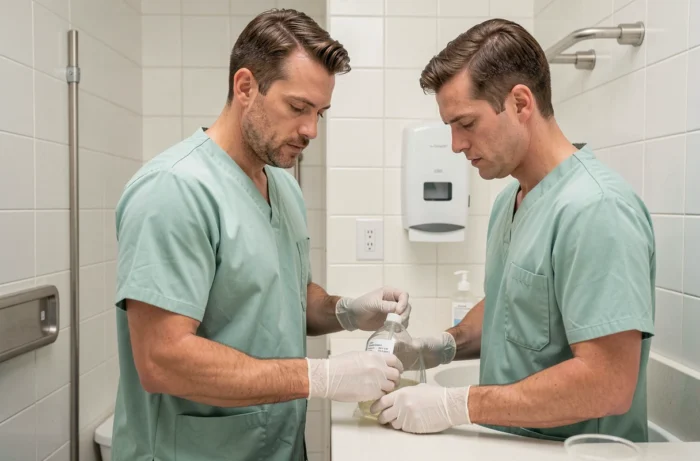
European recommendations (EAU Guidelines on Urological Infections) are clear on this point: a strong urine odor in a catheterized patient is not sufficient to diagnose an infection. Routine urine culture in asymptomatic catheter carriers is discouraged, as it leads to overtreatment and fuels antibiotic resistance.
We recommend emptying the collection bag more frequently and checking for kinks in the tubing before any other steps. An emptied bag every three to four hours significantly reduces the perceived odor.
Asymptomatic bacteriuria: do not treat based on odor alone
The current trend, supported by IDSA and EAU recommendations, is not to treat asymptomatic bacteriuria after surgery, even if the urine smells bad. Isolated odor is a poor criterion for therapeutic decision-making. Only the combination of symptoms (fever, chills, suprapubic pain, burning during urination) justifies a cytobacteriological examination of the urine followed by targeted antibiotic therapy.
Situations that necessitate treatment remain specific: pregnancy, urological surgery with prosthesis placement, recent kidney transplantation, severe immunosuppression.
Post-operative medications and resumption of diet
The standard post-operative prescription combines several molecules capable of altering urinary odor:
- Non-steroidal anti-inflammatory drugs (ketoprofen, ibuprofen) change urinary pH and promote a more acidic odor, sometimes described as acrid by patients.
- Oral opioids (tramadol, codeine) slow transit, decrease the frequency of urination, and concentrate urine, which amplifies any pre-existing odor.
- B vitamin supplements, often prescribed during recovery, are metabolized into sulfur compounds directly excreted by the kidneys.
- Iron supplements, administered in cases of significant intraoperative bleeding, produce a characteristic metallic odor.
Resuming food intake after digestive surgery often involves broths, soft foods, or protein supplements. Proteins broken down into sulfur-containing amino acids (methionine, cysteine) are a classic source of altered urinary odor, particularly whey-based supplements.
Warning signs: when odor indicates a real complication
The clinical challenge is to distinguish benign changes from a surgical warning sign. A fecaloid odor (resembling feces) may indicate a vesicointestinal fistula, a rare but serious complication of pelvic surgery. This type of odor does not confuse with the common sulfurous odor and is usually accompanied by pneumaturia (air in the urine).
Criteria that justify prompt medical contact after surgery:
- Odor associated with a fever above 38 °C or chills
- Severe burning during urination that appeared after catheter removal
- Cloudy urine with visible deposits, especially if it persists beyond 72 hours
- New suprapubic or lumbar pain, unexplained by the surgical procedure
- Fecaloid odor or presence of gas during urination
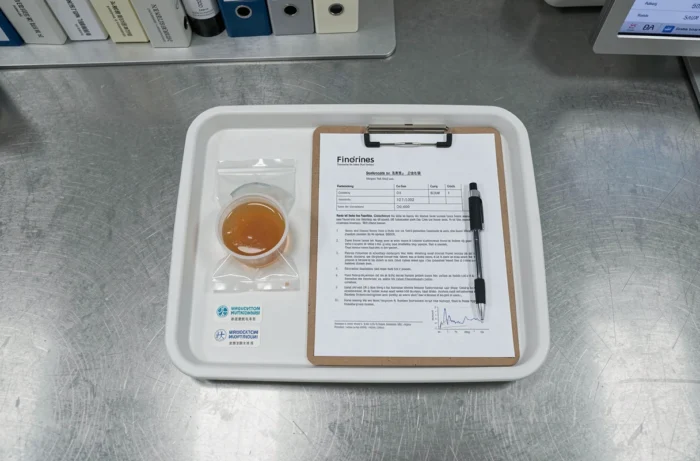
Foul-smelling but clear urine, without systemic symptoms, does not require antibiotic therapy. Hydration remains the primary corrective measure. We recommend an intake of at least one and a half liters per day as soon as the resumption of fluids is permitted, unless specific fluid restrictions are related to cardiac or renal surgery.
The persistence of an abnormal odor beyond one week post-operative, even without other symptoms, warrants a consultation. It may reveal an infectious residue on material (JJ stent, bladder staples) or, more rarely, a metabolic disorder unmasked by surgical stress.