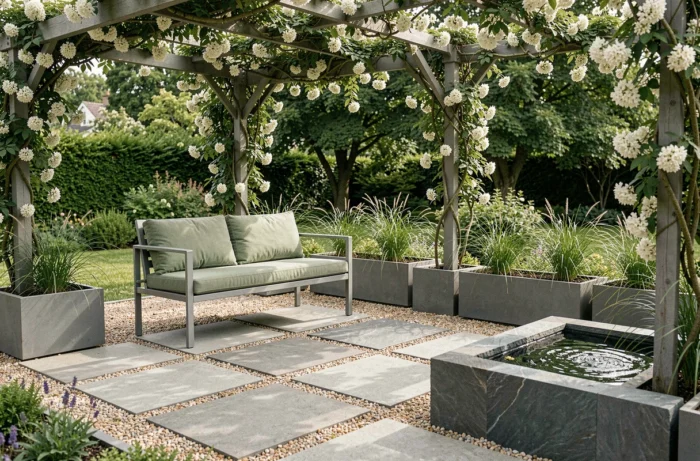
The French garden market shows almost stability, with even a slight decline in motorized equipment (lawn mowers, brush cutters). In parallel, outdoor decoration and leisure furniture are progressing significantly. This shift reflects a change in usage: the outdoor space is no longer just a maintenance area; it is a fully-fledged living space designed for conviviality and relaxation.
Reconfiguration of the garden market: what sales figures reveal
The leisure garden and outdoor decoration categories record respective increases of about 3.8% and 4.4%, while technical equipment declines. This decoupling is not trivial: the French are investing in ambiance, not in lawn mowers.
In terms of purchasing behavior, gardening frequency remains stable, but the average basket for maintenance products is decreasing. Physical garden centers are losing ground to online purchases, where furniture and decor represent an increasing share of revenue. Data published by several retail observatories confirm that outdoor kitchens and garden lounges have been driving the market for two years.
To follow these developments and identify trends that are establishing themselves sustainably, the portal tamaisontonjardin.net regularly compiles analyses on housing and outdoor arrangements.
Natural materials and outdoor furniture: choices that last
Teak, reconstituted stone, and hand-woven fibers dominate outdoor furniture collections. These materials withstand the elements without heavy chemical treatment, distinguishing them from cheap resins that degrade in two or three seasons.
Recycled teak and powder-coated aluminum
Recycled teak, sourced from the deconstruction of boats or buildings, offers a sought-after natural gray patina. It requires no annual treatment if one accepts this aging. Powder-coated aluminum, on the other hand, provides lightness: a chair rarely weighs more than three kilograms, making winter storage easier.
UV-resistant outdoor fabrics
Technical, water-repellent, and UV-resistant textiles replace cotton cushions that would mold by September. Current ranges use mass-dyed threads, meaning the color does not fade on the surface but runs through the entire fiber. Cleaning is done with a water jet, without detergent.
Outdoor kitchen and fire pit: designing a reception area outside
The outdoor kitchen is no longer just a barbecue placed on the lawn. Configurations now include a fixed work surface, a water point, and sometimes a built-in refrigerator. The fire pit serves a dual purpose: warming up cool evenings and acting as a decorative focal point.
Several manufacturers offer corten steel plancha fire pits, an alloy that forms a protective rust layer and requires no maintenance. The patina evolves over time, which appeals to fans of living materials.
- An integrated cooking surface in the fire pit allows for grilling, searing, and simmering without multiplying devices.
- Connecting to natural gas (when the terrace adjoins the house) avoids the storage of propane bottles and offers an adjustable flame.
- Outdoor kitchen modules made of fiber-reinforced concrete resist frost and support heavy loads, unlike untreated wooden structures.
Interior decor trends: earthy colors and wall arches
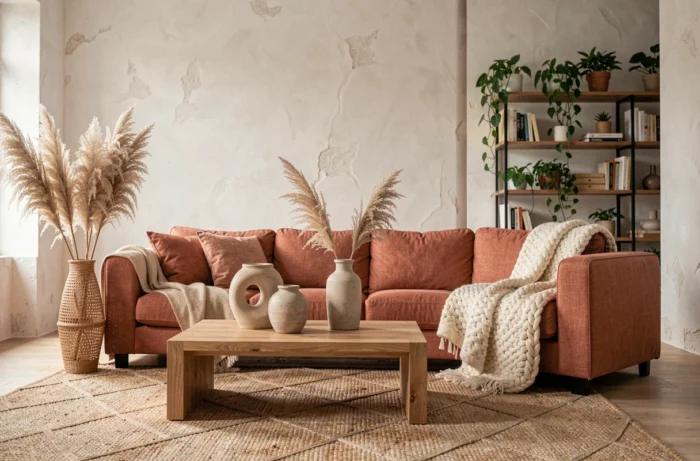
Inside, saturated shades like midnight blue or forest green are giving way to earthy tones: ochre, terracotta, greige. These colors absorb light without darkening the room, provided they are paired with light surfaces (white ceiling, light wood floor).
Reimagined arches and moldings
Architectural details are making a comeback in contemporary interiors. Wall arches, whether masonry or simply simulated by a textured coating, create a visual depth that paint alone cannot produce. Fine moldings, placed halfway up the wall, structure a living room without overwhelming it.
Fabrics and layering of textures
Corduroy, crumpled linen, and boucle wool coexist on the same sofa. This layering works because the textures share a common palette. The trap would be to multiply colors while varying materials: limiting the palette to a maximum of three tones avoids a cluttered effect.
Phytosanitary restrictions and their impact on amateur gardening
The European Union continues the gradual ban on several active substances used in consumer pesticides. Imidacloprid, a widely used neonicotinoid, is among the molecules whose use is now banned or heavily restricted in many contexts.
For the amateur gardener, this concretely means that some anti-aphid or anti-slug products available a few years ago are no longer on the shelves. Biological alternatives (nematodes, plant extracts, beneficial insects like ladybugs) are gaining market share but require more regular application and a precise schedule.
- Nematodes are applied by watering the soil in the evening, on damp ground – their effectiveness drops on dry soil.
- Nettle extract acts as a repellent and fertilizer, but its strong odor limits its use on terraces adjacent to living spaces.
- Insect hotels and nesting boxes for beneficial insects promote natural regulation, provided they are installed before pests arrive, ideally at the end of winter.
The regulatory evolution is pushing garden centers to reorganize their shelves. The share dedicated to biocontrol solutions increases every year, and in-store advice is shifting more towards prevention than curative treatment.
The common thread of all these trends, both indoors and outdoors, remains the same: prioritize materials that age well, versatile arrangements, and practices compatible with current regulatory constraints. The domestic space is now conceived as a coherent whole where the terrace extends the living room, and where the garden nourishes as much as it decorates.