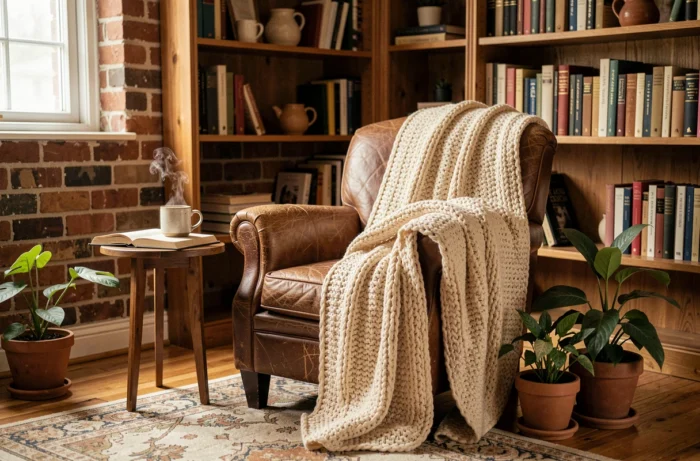
A warm interior isn’t created by filling it with decorative objects. It comes from precise technical choices: the color temperature of light sources, compatibility between insulation and ventilation, and furniture proportions relative to the room’s volume. Every decision affects the space’s thermal, acoustic and visual comfort.
Color temperature and lighting distribution in every room
Light shapes how we perceive a space more than any other factor. A living room with a single ceiling light at a cool color temperature (above 4,000 K) will feel clinical, even if the walls are painted in warm tones.
For a cozy atmosphere, we recommend using multiple light sources at different heights. Table lamps, reading lights, low-mounted wall lights and pendant lights create zones of varying brightness that define the room without dividing it.
A practical rule: reserve color temperatures between 2,700 K and 3,000 K for living spaces (living room, bedroom), and go up to 4,000 K only in work areas (kitchen countertop, desk). A dimmer on each circuit lets you adjust the lighting to suit the activity, from dining to reading.
Switches placed at the entrance to a room encourage you to turn on several light sources at once. A single circuit with just one switch tends to mean using only the ceiling light, which eliminates any sense of depth. Planning your home with Simply Habitat and deciding on the number and placement of light points during the design phase helps avoid this common pitfall.

Ventilation and insulation: the invisible comfort of a warm interior
Decorating without addressing air renewal is like putting beautiful wallpaper on a damp wall. Anses stresses the importance of never blocking air inlets or switching off ventilation, even after insulation work.
Improving insulation without checking ventilation encourages damp and mold. This is a common pitfall in renovations focused solely on energy efficiency. Insulation, ventilation and heating form an inseparable trio: changing one without adjusting the others undermines overall comfort.
Under French regulations, homes rated G can no longer be rented as decent housing in mainland France as of January 2025. The deadlines will then extend to ratings F and E. This requirement makes it essential to consider thermal comfort from the outset of interior design, rather than treating it as a final decorative layer.
Practical steps to maintain good indoor air quality
- Air each room daily, even in winter, for about ten minutes to refresh the air without cooling the walls
- Check that ventilation grilles (air inlets on windows and extraction vents in the kitchen and bathroom) are not blocked or covered by furniture or curtains
- Limit sources of indoor pollution: excessive use of scented candles, paints without an A+ label, and untreated particleboard furniture that emits formaldehyde
Furniture proportions and circulation within the space
An oversized sofa in a modest-sized living room doesn’t create comfort. It creates clutter. A room’s functionality depends on the balance between furniture volume and clear floor space.
Allow around 60 cm between two pieces of furniture for occasional passage and 90 cm for frequent passage. With less space, your body senses the restriction before your mind identifies it. The room feels cramped, whatever its actual size.
Adapting your layout for hybrid working
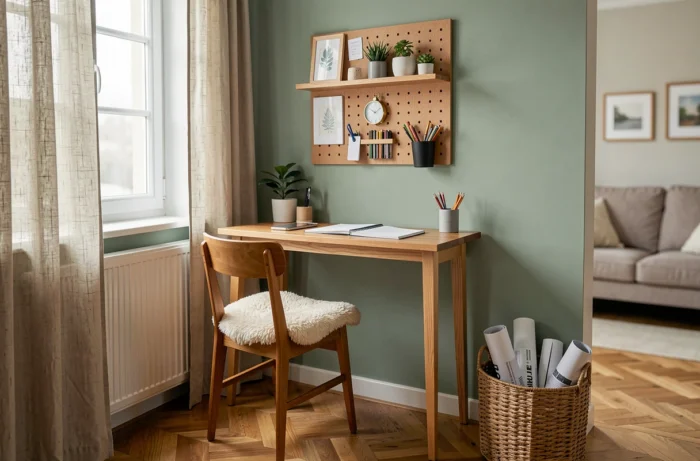
Remote work has become a lasting feature of life in France, mostly in a hybrid format. Planning an adaptable workspace with suitable lighting and visual separation from other activities is more practical than dedicating an entire room to a desk used two days a week.
A dual-purpose piece of furniture (a console that unfolds into a work surface, or a shelving unit with a pull-out desk) is better suited to this reality than a fixed 120 cm desk that permanently takes over a corner of the living room. The key is to choose each piece of furniture based on how many hours it will actually be used, not how it might be used in theory.
Color palettes and materials: cohesion over accumulation
Three colors are enough to define a room: a dominant shade (walls, floor), a secondary shade (main furniture, curtains) and an accent color (cushions, objects, lighting). Beyond that, the eye has too much to take in and the sense of warmth fades.
Earthy shades (ochre, terracotta, sage green, brown) create a visual cocoon that absorbs light rather than reflecting it. Combined with natural materials (solid wood, washed linen, bouclé wool, matte ceramics), they add tactile depth that smooth, glossy surfaces cannot provide.
- Wood adds visual warmth, but its finish matters: glossy varnish reflects light and creates a cold effect, while a matte oil finish preserves the material’s natural appearance
- Layered textiles (a throw on the sofa, a rug over wood flooring, a thick curtain in front of a glass door) add sound absorption, reducing reverberation and directly contributing to a sense of comfort
- Matte paint on walls and ceilings softens unwanted reflections and creates a more unified sense of space, whereas a satin finish highlights every surface imperfection
A common pitfall is choosing each item separately in the store. A cushion that looks beautiful on the shelf may clash with the rest of the room once it’s on the sofa. The most reliable way to test a palette is to gather physical samples (paint, fabric, wood) in the room they’re intended for and view them under its own lighting.
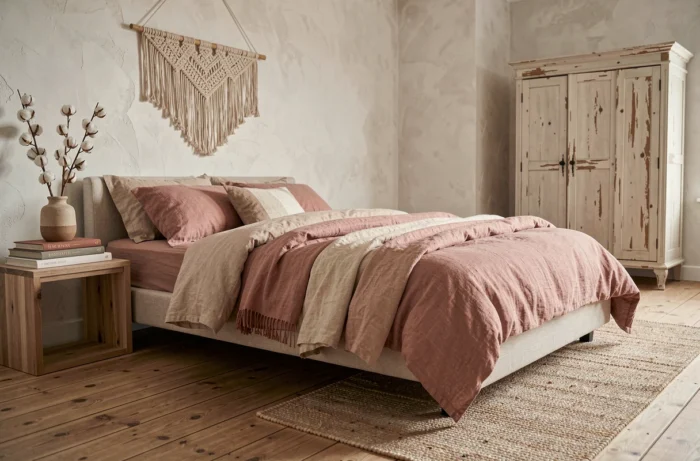
A warm, functional interior depends on harmony between light, air, proportions and materials. Each factor interacts with the others: a beautiful color palette can’t make up for poorly planned lighting, and well-proportioned furniture loses its impact in a poorly ventilated room. Addressing all four elements together from the design stage creates a lasting result that isn’t dictated by current decorating trends.