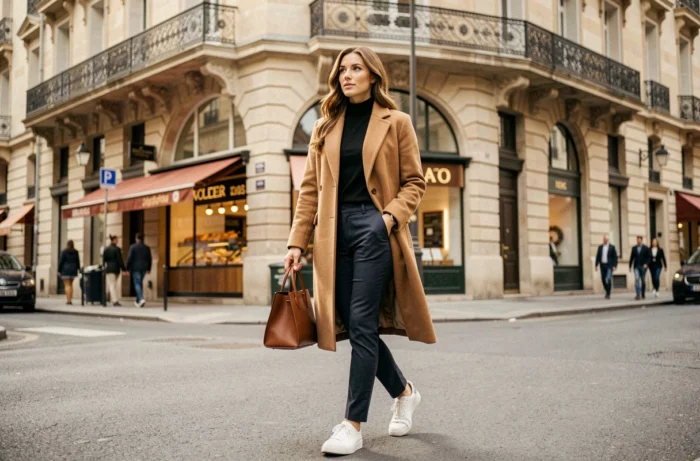
In Paris, style is spotted on the street before it appears in magazines. An open trench coat over raw denim, a pair of well-worn loafers, a soft leather bag tucked under the arm: the combinations look simple, but they’re built on deliberate choices. Paris fashion trends follow the same logic, with each piece mattering more than the number of items you wear.
Building a Parisian wardrobe that lasts for seasons
Have you noticed how Parisian women often wear the same basics, styled in different ways? The idea is to build a small core of versatile clothes rather than make impulse purchases for a single season.
This core consists of around ten pieces: a navy or black blazer, a well-fitting straight-leg pair of jeans, a thick cotton white shirt, a ribbed-knit sweater and fluid pleated trousers. Each piece works seamlessly with the others.
The real challenge isn’t choosing the pieces, but checking how they fit before anything else. A shoulder seam that sits a centimetre too low, a hem that falls too far over the shoe, a collar that gapes: these details distinguish a polished silhouette from an ill-fitting look. When you try on a garment, move around in it. Sit down, raise your arms, walk. Ease of movement is part of Parisian style.
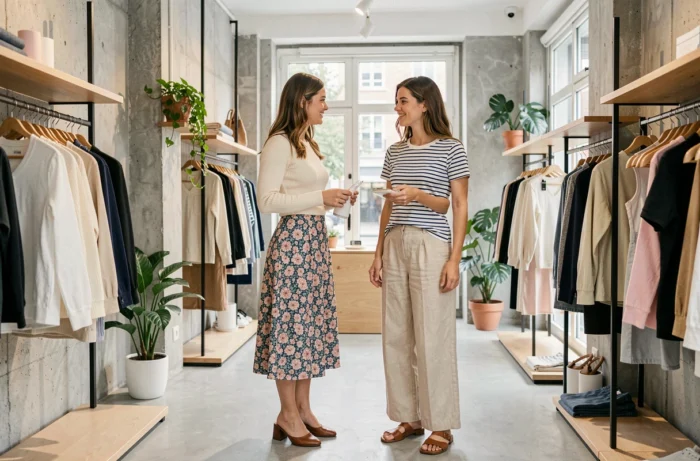
Parisian vintage shops and consignment stores are great places to find these basics in fabrics that mainstream retailers rarely offer at affordable prices. Virgin wool, brushed cotton, full-grain leather: second-hand clothes are widely available in brick-and-mortar shops, not just on online platforms.
Some brands even run their own resale programmes, making it easier to track down a specific piece. For the latest on fashion on Paris Blogged, these second-hand channels are now part of the usual shopping routine.
Paris fashion trends: the fabrics and colours shaping the season
Paris’s autumn-winter shows set the tone, but the real test happens on the street. A trend that doesn’t work in everyday life can disappear within weeks.
Soft leather takes the place of stiff leather
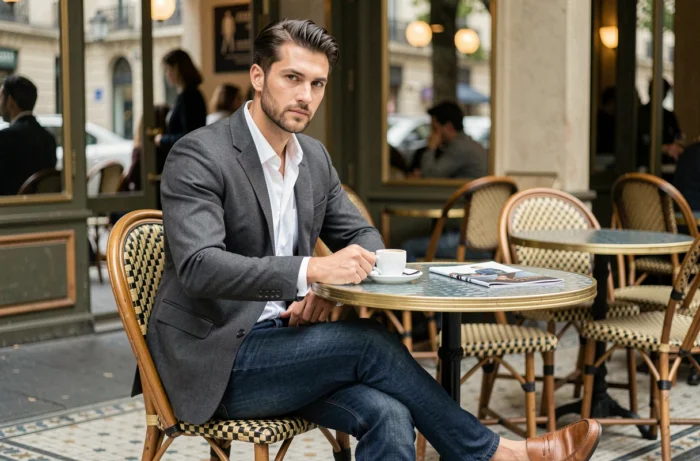
Leather remains a staple of the Parisian look, but its texture is changing. Soft, almost crumpled leather jackets are replacing structured styles. This type of leather is easy to wear over a sweater or shirt without adding too much bulk around the shoulders.
Choose a lightweight leather that develops a patina over time for a more natural look than a thick, brand-new style. Chocolate, cognac and matte black are the leading shades.
Autumn colours: beyond black
Black remains a Parisian staple, but street-style looks are broadening the palette. Deep burgundy, forest green and heather grey add depth without sacrificing understated style. The rule is simple: wear no more than two neutral colours per outfit, plus one subtle accent.
Pairing chocolate trousers with an ecru sweater and a dark grey coat works better than layering three shades of black. The soft contrast adds depth without looking like you’ve tried too hard.
Fashion accessories in Paris: the everyday details that make a difference
Parisian accessories are known for their understated appeal. No oversized visible logos, no chunky jewellery (unless it’s a deliberate choice), and no handbag that looks too new.
- A silk or fine wool scarf, simply tied around the neck or tucked into a shirt collar, adds a touch of colour without overwhelming the silhouette
- A slim-faced watch or a simple metal bracelet is all you need on your wrist. The idea is to wear one piece of jewellery that draws attention, rather than several that cancel each other out
- Shoes set the tone for the whole outfit: slightly pointed ankle boots for a structured look, white leather trainers for a casual feel, or loafers for a versatile middle ground
The bag deserves special attention. A medium-sized bag in soft leather, in a colour that goes with most of your wardrobe, works for almost any occasion. Parisian women who carry the same bag for years aren’t short on options: they’ve simply found the right one.
Parisian style and clothing labels: a useful guide that’s still little known
France now has a new way to display the environmental cost of clothing. It’s still voluntary, but seeing it on a label gives you a concrete indication of a garment’s impact.
Why does this matter for style? Because choosing durable clothing often means choosing better-quality fabric. Garments with a good environmental score generally use more hard-wearing fibres and fewer chemical treatments, so they age better. A certified wool sweater keeps its shape longer than a cheap acrylic one.
French regulations also address PFAS, chemicals found in some textile treatments, such as waterproofing and stain resistance. Aside from health concerns, PFAS treatments often wear off after just a few washes. An untreated fabric, chosen well, stays functional for longer.
Make your style your own in Paris without following every trend
The most common pitfall is copying a look from a runway show or street-style account without adapting it to your body shape or everyday life. A trend that works on a Fashion Week model won’t necessarily work on the metro at eight in the morning.
- Try just one new trend per outfit so you can see how it works without throwing off the whole look
- Photograph your outfits for a week to quickly see what works and what doesn’t suit your silhouette
- Ask someone else how a garment fits, rather than what trend it represents, to keep your choice grounded in what you can see and feel
Everyday Parisian style doesn’t come together in a single season. It’s refined by elimination: remove what doesn’t work, keep what fits just right, and resist the urge to add one more piece when the outfit already works.