
An expert auto motorcycle opinion is not limited to a mechanical diagnosis. It is a technical document that holds the responsibility of a certified professional and covers points that neither the technical inspection nor a simple visual check can address: accident history, mileage consistency, compliance of safety components, and now, projection of the fiscal cost related to the vehicle.
Traction battery and hybridization: what the pre-purchase expertise must cover in 2026
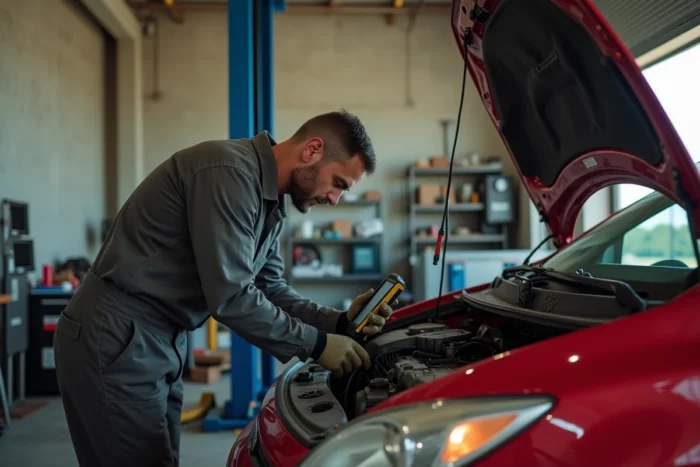
The rise of non-rechargeable hybrid vehicles, identified as the big winners of the 2026 market due to more favorable taxation, poses a concrete technical problem. The health status of the traction battery is not included in the technical inspection. An independent expert equipped with an OBD diagnostic tool can measure the residual capacity of the cells, the number of charge cycles, and detect a hidden replacement.
On a hybrid, a degraded battery leads to overconsumption of the thermal engine and nullifies the expected tax benefit. We recommend systematically requesting the residual capacity reading in the expertise report, even if the seller claims that the battery has been refurbished.
For pure electric vehicles, the situation is even more critical. Without an expert report attesting to the actual capacity, the buyer has no negotiating leverage on the price. Consulting expert auto motorcycle opinions allows for comparing the methodologies used by different professionals and identifying those who include this battery diagnosis in their service.

Weight tax and ecological penalty: the fiscal angle that classic expertise ignores
Since 2026, the weight tax applies from 1,500 kg. A used SUV bought at an attractive price can generate a significant tax overcost at resale or when changing the registration document. A good expert opinion now includes the future fiscal cost of the vehicle, not just its mechanical condition.
We observe that most traditional expertise reports focus on market value and visible damages. They do not indicate either the actual unladen weight of the vehicle (which may differ from the catalog weight after modifications) or the projection of the applicable penalty. This is a gap.
An expert who weighs the vehicle or verifies the compliance of the certificate of conformity with the actual weight provides highly valuable information. This is particularly relevant for thermal sedans and SUVs, dominant segments in the used car market.
Auto motorcycle expertise report: reading between the lines of the document
The report produced by a certified automotive expert follows a codified structure. Not all reports are equal, and the difference often lies in the appendices and the reservations expressed.
Here are the elements to check as a priority in an expertise report before purchase:
- The mention “subject to disassembly” indicates that the expert could not inspect certain hidden components (gearbox, clutch, undercarriage). If this mention appears on several items, the report loses a significant part of its value
- The consistency between the recorded mileage, maintenance history, and wear of wear parts (brake pads, tires, clutch). A blatant discrepancy between displayed mileage and actual wear is the first indicator of fraud
- The presence or absence of a frame check: on an accident vehicle, only the frame check confirms that the chassis geometry is compliant. A report without this data on a vehicle with a history of damage is incomplete
- The timestamped photos attached to the report, which constitute proof of the vehicle’s condition at the time. Without photos, the report has limited evidential value in case of dispute
Difference between opinion, expertise, and inspection
An expert opinion is a consultative document. A judicial expertise is ordered by a court and has probative force. A pre-purchase inspection is a commercial service, not an act of expertise in the regulatory sense. Confusing these three levels leads to disappointments during a claim.
Expertise in the strict sense engages the professional civil liability of the certified expert. The inspection, on the other hand, is often carried out by a mechanic or a provider without ministerial approval. The level of legal protection for the buyer is not comparable.
Overpriced used vehicle: when expertise becomes a negotiation tool
The rise in prices in the used market, documented by several observatories, makes pre-purchase expertise strategic beyond simple technical verification. An expert report quantifying defects allows for negotiating a justified discount.
We observe that buyers who present a report during negotiations obtain price adjustments much more easily than relying on subjective arguments. The professional seller knows that an expert report can serve as evidence in case of a hidden defect claim.
On recent used thermal sedans and SUVs, where prices remain high, the cost of expertise often pays off right from the negotiation phase. The report also serves as documentary proof if a defect appears in the months following the purchase.
When expertise is not worth the cost
For a vehicle with a low resale value, the price of expertise can represent a disproportionate part of the transaction amount. In this case, a targeted mechanical inspection (engine, transmission, braking) is sufficient to secure the purchase without incurring the costs of a full report.
The choice between full expertise and inspection depends on the price of the vehicle, its age, and the complexity of its engine. For a hybrid or electric vehicle, full expertise with battery diagnosis remains the only reliable option. For a thermal city car over ten years old, a targeted inspection covers the main risks at a lower cost.