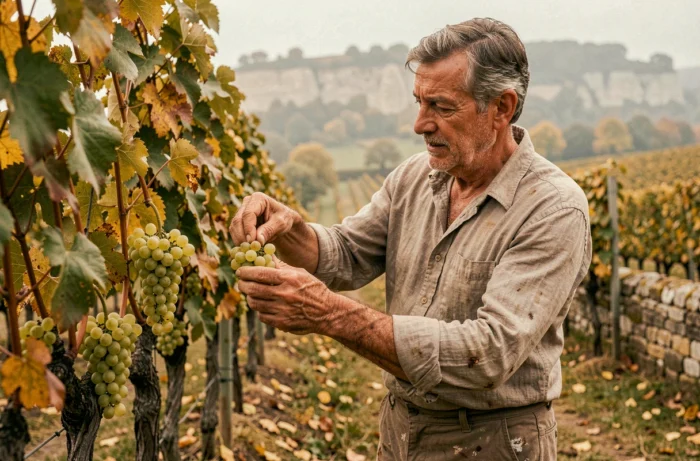
The Vouvray designation is based on a strict regulatory framework, recognized by the INAO since the decree of December 8, 1936. The vineyard extends over eight municipalities on the right bank of the Loire, between Tours and Amboise, and exclusively produces white wines. Chenin Blanc, locally known as Pineau de la Loire, forms the foundation of this appellation, but the reality of the grape varieties and the hierarchy of the wines deserve closer examination.
Orbois and Menu Pineau: the regulatory tolerance of the Vouvray appellation
Vouvray is often presented as a single-varietal appellation, which does not reflect the entire specifications. In its version approved by decree on November 29, 2023, it mentions Chenin Blanc as the main grape variety but allows Orbois as an accessory grape variety. Up to 5% of Orbois can be included in the blend.
Some Anglo-Saxon sources also cite a theoretical tolerance for Menu Pineau. In practice, these complementary grape varieties remain marginal and are very rarely mentioned on labels. Vouvray producers have no commercial interest in diluting the image of Chenin Blanc, which carries the reputation of the appellation. Field reports vary on the actual use of Orbois: some estates use it in homeopathic doses, while others have completely abandoned it.
To delve deeper into the grape varieties of Vouvray white and understand how each style of wine relates to the appellation, the distinction between main grape variety and accessory grape varieties is a good starting point.
Chenin Blanc from Vouvray: what tuffeau changes in the wine
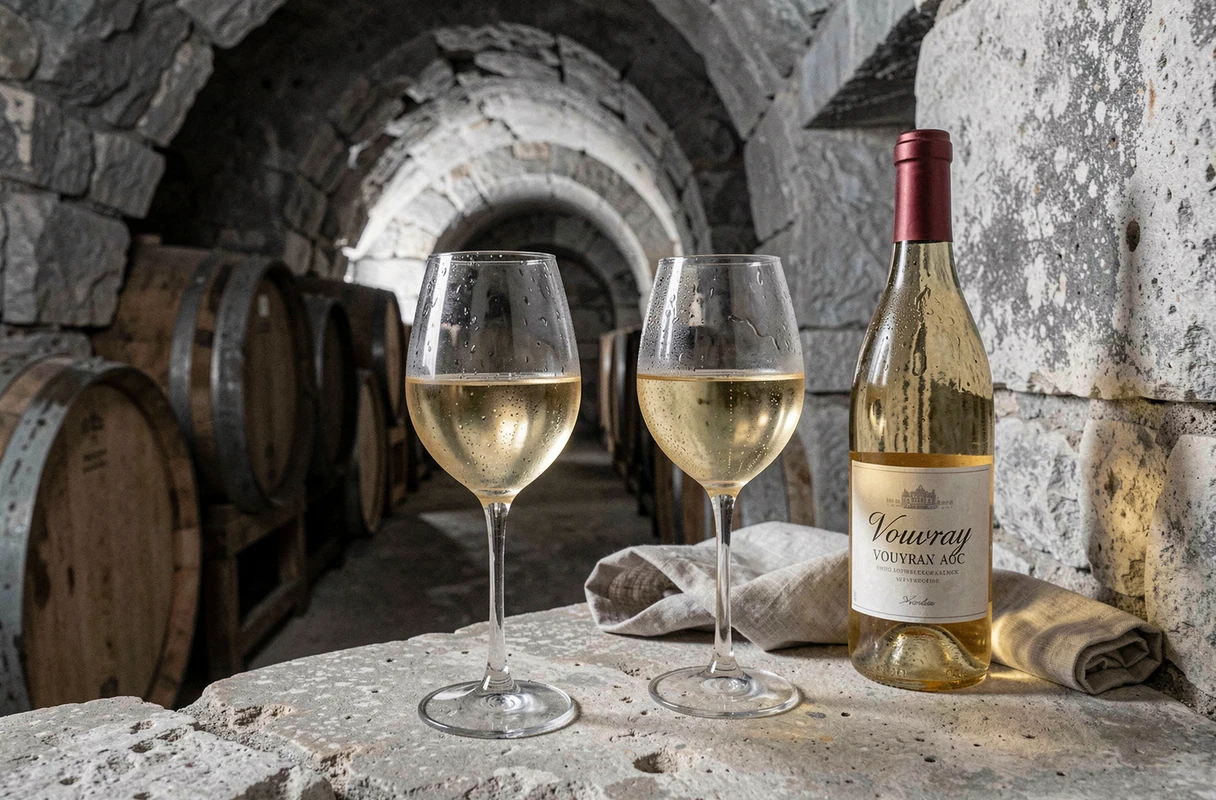
Chenin Blanc expresses itself differently depending on the terroirs of the Loire Valley. In Vouvray, it is the tuffeau covered with clay and flint that gives the wines their distinctive profile. This porous limestone rock plays a dual role: it regulates the water supply to the vine at depth and offers, through the troglodytic caves carved into its slopes, stable temperature conditions for aging.
The climate of Vouvray is located at the confluence of oceanic and continental influences. This geographical position produces marked vintage effects, much more pronounced than in other Loire regions. A warm year will lead winemakers towards concentrated sweet wines, while a cooler vintage will yield tight, mineral dry wines.
Clay with flint vs. aubuis: two interpretations of Chenin
The plots located on the clay with flint plateaus produce wines with a bold attack and a chiseled acidity. The aubuis soils (clay-limestone on tuffeau), more prevalent on the slopes, provide greater roundness and volume on the palate. The same estate can vinify these two profiles separately, which explains the diversity of styles within a single appellation.
Dry, semi-dry, sweet, and fine bubbles: four wines under one AOC
The Vouvray appellation is divided into three official typologies:
- Vouvray white still: dry, semi-dry, or sweet depending on the residual sugar content. The vintage largely determines the style, but the winemaker retains a margin of choice at the time of harvest and vinification.
- Vouvray sparkling: made using the traditional method with bottle fermentation, it offers fine bubbles often compared to some high-quality crémants.
- Vouvray pétillant: less effervescent than the sparkling, with lower pressure in the bottle. This lesser-known style remains a specificity of the appellation.
The available data do not allow for precise quantification of the production distribution among these styles, which varies significantly from one vintage to another. Years with high maturity favor semi-dry and sweet wines, while cooler vintages steer production towards dry and sparkling wines.
Domaine Huet and the question of lieux-dits: an informal hierarchy
Vouvray does not have an official classification into premiers crus or grands crus, unlike Burgundy. However, an informal hierarchy has developed around plots identified by enthusiasts and critics. Domaine Huet perfectly illustrates this phenomenon with three lieux-dits that have become references: Le Haut-Lieu, Le Mont, and Clos du Bourg.
These plots are sometimes described as the local equivalent of a grand cru hierarchy. This interpretation is more about consensus among connoisseurs than a formal AOC classification. The INAO has not created complementary geographical designations to distinguish the best terroirs of Vouvray, unlike what exists in other vineyards of the Loire Valley.
Reading a Vouvray label: mentions and designations
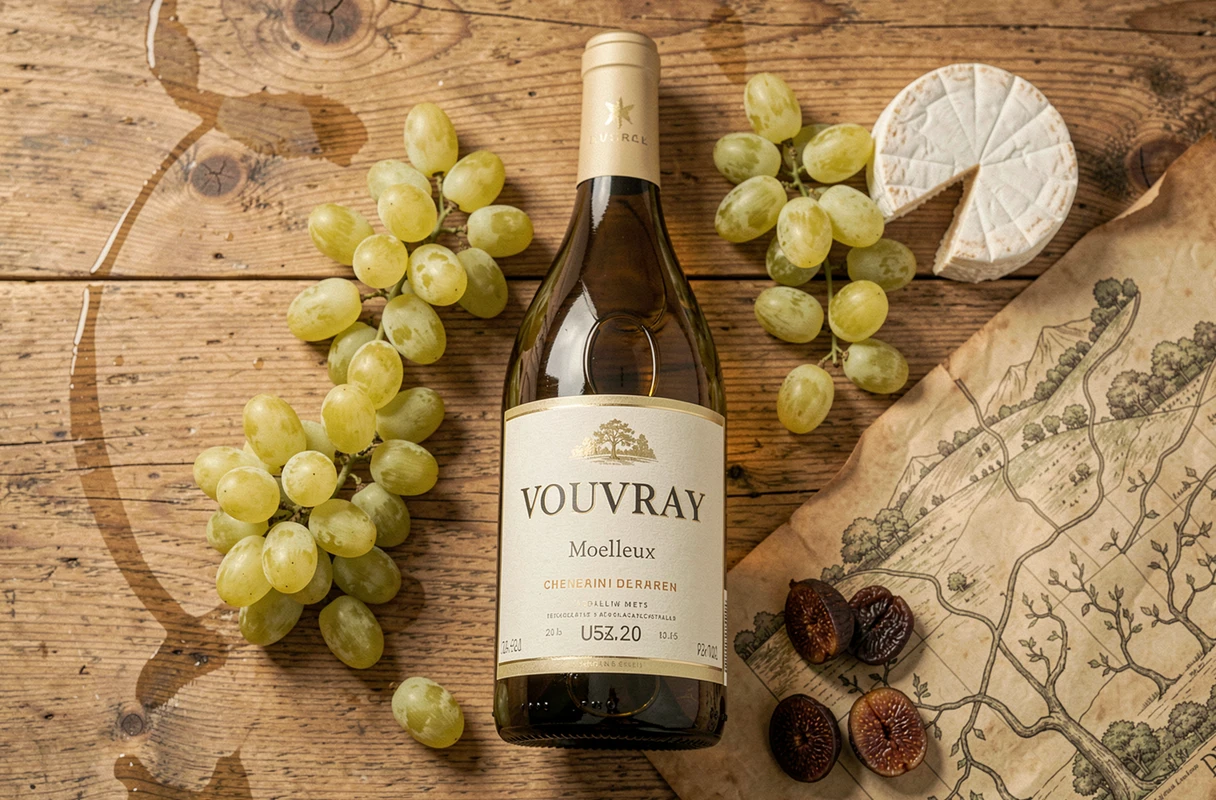
The name of the appellation can be supplemented by the geographical designation “Val de Loire,” according to the rules of the specifications. Beyond this mention, the most useful information on the label remains:
- The mention dry, semi-dry, or sweet, which informs about the taste profile.
- The name of the lieu-dit or plot, which indicates the precise origin within the appellation.
- The mention “traditional method” for the sparkling wines, which guarantees bottle fermentation.
- The vintage, particularly determining in Vouvray due to the high climatic variability.
Aging potential of Vouvray: a Chenin that ages in silence
The best Vouvray sweet and semi-dry wines are among the white wines most suited for aging in France. The natural acidity of Chenin Blanc, combined with residual sugars, creates a balance that develops over several decades. Recent tasting descriptions confirm that the great cuvées from Domaine Huet, especially the first tries from Clos du Bourg, gain complexity over time.
Dry Vouvrays also age, but in a different register: the minerality brought by the tuffeau asserts itself with the years, while the aromas of white fruits evolve towards notes of quince, honey, and dried fruits. Sparkling wines, on the other hand, are generally consumed younger.
The Vouvray appellation celebrates its 90 years of AOC with over fifty active winemakers in the territory. Chenin Blanc remains the common thread of a diversity of styles that few French appellations can claim from a single dominant grape variety. The question of an official classification of lieux-dits remains open, driven by a new generation of producers who assert the specificity of their plots.